Rochester, New York, 4/04/26 - Vitamin and mineral deficiency rarely stays in one lane. Low intake, poor absorption, long stretches of repetitive eating, and higher nutrient demands often show up as lower energy, slower recovery, more frequent illness, and a sense that the body is not working the way it should. That is why this topic matters beyond a single lab value. Nutrient status touches immunity, mood, muscle function, focus, and the pace of everyday life.
The immune system depends on enough protein, vitamins, and minerals to build immune cells, support barrier tissues, and regulate inflammation. When the diet falls short for weeks or months, the effects often reach well beyond a run-down feeling. A useful plan looks at the full picture: vitamin deficiency symptoms, food quality, routine, and whether targeted support makes sense. If you want a plain-language refresher on the bigger defense picture first, Synevit's Understanding the Immune System is a good place to start.
Why Deficiency Reaches Beyond One Symptom
Vitamin and mineral deficiency is usually a systems issue rather than a single-nutrient story. A 2023 review on micronutrients and immune response explains that vitamins and trace elements take part in immune-cell development, signaling, antioxidant defense, and the maintenance of physical barriers such as skin and mucosal surfaces (PMC10632063). Once intake slips for long enough, the body often feels the strain in several places at once.
That helps explain why a person often notices fatigue, weaker exercise recovery, slower wound healing, more frequent minor infections, or brain fog in the same stretch of time. These patterns do not prove one exact deficiency by themselves, but they do point toward a broader nutrition question. Deficiency is often less about one dramatic collapse and more about everyday functions getting a little harder, a little slower, and a little less reliable.

How Deficiency Affects Immune Health
Immune health relies on steady access to vitamins and minerals because immune cells are constantly being built, activated, and replaced. The PubMed review Vitamins and Immune System Health notes that vitamins are active regulators of the immune response and links vitamin deficiency with higher inflammation and lower immune performance. In simple terms, low nutrient status leaves the system working with fewer tools.
Vitamin C is one of the clearest examples. The NIH Office of Dietary Supplements notes that vitamin C supports neutrophil migration, phagocytosis, microbial killing, and other immune functions, which is why vitamin C immune function keeps coming up in both clinical writing and everyday search behavior (NIH ODS: Vitamin C). Zinc matters too because it supports immune-cell growth and signaling, and low zinc status has long been associated with weaker immune defense (NIH ODS: Zinc).
This is also why broad searches for vitamins for immune system support are only partly answered by one supplement. Vitamin C, vitamin D, vitamin A, vitamin E, B6, B12, folate, iron, zinc, selenium, and copper all participate in different parts of immune function. A sound immune-support plan therefore starts with adequacy, not hype.
General Health Effects on Energy, Mood, and Strength
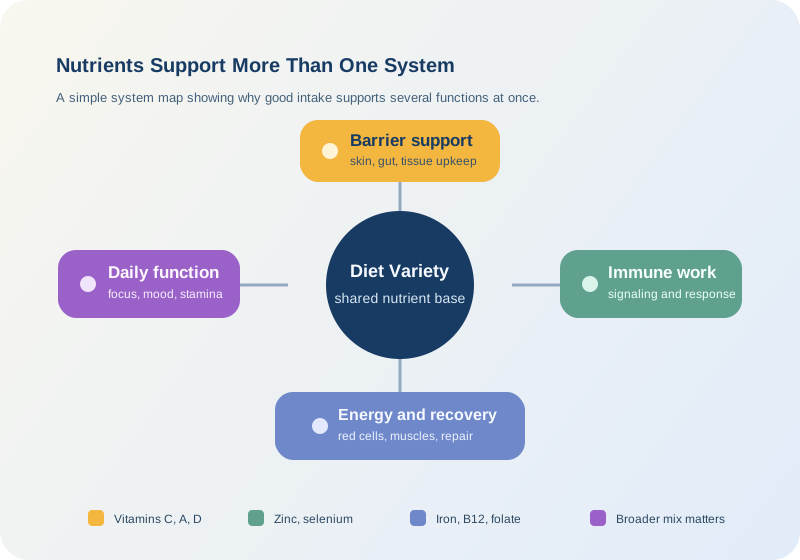
The body does not separate immune health from the rest of general health. Nutrients that support immune response also support red blood cell production, nerve signaling, collagen synthesis, bone maintenance, thyroid activity, and muscle performance. When status runs low, people often describe the result in practical language: "I get sick easily," "I feel flat all day," "My legs feel heavy," or "My focus is worse than it used to be."
Cleveland Clinic's vitamin deficiency overview lists fatigue, skin and hair changes, muscle weakness, memory or concentration trouble, numbness, tingling, mood shifts, and weaker bones among the symptoms tied to different vitamin deficits (Cleveland Clinic: Vitamin Deficiency). That range matters. It shows why vitamin deficiency effects on body systems rarely stop at one complaint. The immune question and the general-health question usually travel together.
Mineral deficiency symptoms often overlap with the same story. Low iron is linked to lower oxygen delivery and fatigue. Low zinc is linked to immune weakness, poor appetite, and slower healing. Low magnesium is often discussed around cramps, sleep quality, and energy regulation. The message is not that every low-energy day is a deficiency problem. The message is that persistent, multi-system symptoms deserve a nutrition lens instead of being written off too quickly.
Early Warning Signs Worth Noticing
Early signs are often subtle enough to feel ordinary. A person often notices repeated colds, slower bounce-back after stress, mouth or tongue changes, brittle nails, hair shedding, pale skin, poor stamina, reduced appetite, numbness, tingling, or a steady drop in concentration. None of these signs points to one guaranteed answer, but together they form the kind of pattern that deserves attention.
This is where the phrase vitamin deficiency symptoms becomes useful, because people often search it long before they connect the dots in daily life. The same goes for mineral deficiency symptoms, especially when fatigue, cramps, poor exercise tolerance, or recurrent illness are involved. If you want a broader overview of how those patterns are often grouped and interpreted, Synevit's Uncovering Vitamin Deficiencies: Symptoms, Causes, and Solutions lays out that foundation clearly.
Prevention Through Diet and Everyday Nutrients
Prevention usually starts with variety and consistency rather than with a dramatic protocol. A plate pattern built around protein, legumes, leafy greens, citrus, berries, dairy or fortified alternatives, eggs, fish, nuts, seeds, and colorful vegetables gives the body far more to work with than a repetitive low-protein menu. Vitamin C-rich foods support iron absorption. Animal foods and fortified foods help cover B12. Dairy, eggs, fatty fish, and fortified products help fill vitamin D gaps. Minerals for immune system support often come from nuts, seeds, beans, shellfish, meat, and whole grains.
That matters because vitamin and mineral deficiency usually grows through small daily misses, not just through extreme situations. Busy schedules, limited food variety, restrictive dieting, digestive conditions, alcohol overuse, or certain medications all shift the odds in the wrong direction over time. If you want a broader look at trace elements and intake patterns, Synevit's Mineral Deficiency Guide fills in that background well.
When Persistent Symptoms Deserve a Closer Look
When fatigue, frequent illness, pale skin, weakness, tingling, or poor recovery stay in place despite better sleep and steadier meals, a healthcare professional should guide the next step. Cleveland Clinic notes that blood tests are the main way providers identify vitamin deficiencies and that routine lab work often picks up problems before symptoms become obvious (Cleveland Clinic: Vitamin Deficiency). That is usually more useful than guessing through five supplements at once.
A practical workup often starts with the pattern itself: what symptoms are present, how long they have lasted, what the diet looks like, whether there has been weight loss, whether digestion has changed, and whether medications or chronic conditions affect absorption. Once that context is clear, targeted labs and targeted support make a lot more sense than random stacking.
Why Quality and Consistency Still Matter
Even when a deficiency risk is real, progress usually depends on consistency more than urgency. A nutrient plan only helps if it is realistic enough to follow, gentle enough to tolerate, and clear enough to repeat every day. That is one reason Synevit's educational approach keeps coming back to ingredient form, routine, and product quality rather than quick promises. Better food quality, better adherence, and targeted support usually do more than a short burst of supplement enthusiasm.
That is also the most grounded way to think about immunity. Stronger daily nutrition supports a stronger baseline. Once that baseline improves, the body is in a better position to handle ordinary stress, seasonal illness, training load, and recovery without feeling depleted all the time.
Key Takeaways
- Vitamin and mineral deficiency often affects immunity, energy, mood, and recovery at the same time.
- Vitamin C, zinc, iron, B12, folate, vitamin D, and other micronutrients all take part in immune health.
- Vitamin deficiency symptoms and mineral deficiency symptoms often begin subtly before they become obvious.
- Prevention usually depends on diet variety, steady routine, and early attention to patterns that keep repeating.
- Persistent symptoms deserve a targeted conversation with a healthcare professional rather than random supplement stacking.
Frequently Asked Questions
- Which deficiencies show up most often in immune-health discussions?
Vitamin C, vitamin D, B6, B12, folate, iron, zinc, selenium, and vitamin A all come up often because they support different parts of immune defense.
- Does frequent illness always point to vitamin deficiency?
No. Sleep, stress, exposure, chronic illness, and other factors also matter. But repeated illness plus low energy or poor diet quality is a reasonable signal to look more closely at nutrient status.
- What are the most common vitamin deficiency symptoms people notice first?
Fatigue, weak recovery, pale skin, hair or nail changes, muscle weakness, poor concentration, numbness, tingling, and recurring minor illness are some of the most common starting complaints.
- Is food enough for prevention of nutrient deficiency?
Food is usually the foundation. Supplements are most useful when intake stays low, absorption is impaired, or lab work and clinical context point toward a more specific gap.