Rochester, New York, 6/03/25 - The immune system is your body’s intricate defense network, tirelessly working to shield you from harmful invaders such as bacteria, viruses, fungi, and parasites. This remarkable system, made up of organs, cells, proteins, and tissues, identifies and eliminates threats while leaving healthy cells unharmed. Have you ever wondered what the immune system does or how the immune system works? In this detailed guide, we’ll explore its components, functions, and the benefits of having a strong immune system, while offering practical tips for an immune system boost to support your overall health.
A strong immune system is a cornerstone of well-being. Beyond fighting off infections, it plays a critical role in detecting and destroying cancer cells, speeding up wound healing, and even supporting mental health through its connection to the gut-brain axis. Understanding how the immune system works empowers you to make informed choices that enhance its performance, leading to a healthier, more resilient life.
What Is the Immune System?
The immune system is a sophisticated network dedicated to defending the body against pathogens-disease-causing agents that threaten our health. Its primary task is to detect these invaders and neutralize them before they can cause harm, ensuring our survival by preventing infections. The Cleveland Clinic describes it as a harmonious collaboration of components, including white blood cells, lymphoid organs, and more, all working together to maintain balance.
In daily life, the immune system is our silent protector, shielding us from common ailments like colds, flu, or minor cuts that could become infected. A strong immune system adapts to new challenges by learning from past encounters, which is why we rarely catch the same illness twice. This adaptability underscores the benefits of having a strong immune system, offering not just protection but also resilience and faster recovery.

Parts of the Immune System
The immune system relies on a team of specialized components to function effectively. Let’s break down its key players and explore their roles in this defense network.
White Blood Cells
White blood cells, or leukocytes, are the frontline soldiers of the immune system, originating in the bone marrow. They come in two main types:
- Phagocytes: These cells engulf and destroy pathogens. Neutrophils, the most common type, are essential for combating bacterial infections like pneumonia. Macrophages clean up debris and signal other immune cells with cytokines, while dendritic cells bridge innate and adaptive immunity by presenting antigens to T cells.
- Lymphocytes: This group includes B cells, which produce antibodies to neutralize threats; T cells, which coordinate responses or directly attack infected cells; and natural killer (NK) cells, which target viruses and tumors. Learn more about their roles from NCBI.
Antibodies
Antibodies, also called immunoglobulins, are Y-shaped proteins produced by B cells. They latch onto specific antigens-unique markers on pathogens-either neutralizing them or flagging them for destruction. With five distinct classes (IgG, IgM, IgA, IgE, and IgD), antibodies handle diverse tasks, from crossing the placenta to protect a fetus to triggering allergic responses.
Complement System
The complement system is a group of proteins that amplify immune responses. It can rupture pathogen membranes, enhance phagocytosis, and boost inflammation, working hand-in-hand with antibodies and phagocytes to fortify the body’s defenses.
Lymphatic System
This network of vessels, nodes, and organs-like tonsils and the appendix-circulates lymph, a fluid containing immune cells. Lymph nodes act as filters, trapping pathogens and rallying immune responses to keep infections at bay.
Spleen
The spleen filters blood, removing worn-out cells and pathogens while housing immune cells ready to tackle blood-borne invaders, making it a vital hub for immunity.
Bone Marrow
Bone marrow is the production center for all blood cells, including the leukocytes that power the immune system. It ensures a steady supply to maintain robust defenses.
Thymus
Situated behind the breastbone, the thymus educates T cells to distinguish between self and non-self, preventing the immune system from attacking the body’s own tissues.
Additionally, the skin and mucous membranes serve as physical barriers, preventing pathogen entry with their acidic properties and antimicrobial secretions. The gut microbiome also plays a role, interacting with immune cells to regulate responses and bolster overall health.
How the Immune System Works
Curious about how the immune system works? It operates through a coordinated, multi-step process:
- Detection: Immune cells identify danger signals-patterns like PAMPs (pathogen-associated molecular patterns) and DAMPs (damage-associated molecular patterns)-using specialized receptors.
- Innate Immunity: Immediate defenses, such as skin barriers, phagocytes, and the complement system, spring into action within hours.
- Antigen Presentation: Dendritic cells deliver antigens to T cells in lymph nodes, bridging innate and adaptive responses.
- Adaptive Immunity: B cells produce tailored antibodies, T cells eliminate infected cells, and memory cells form to ensure faster responses to future threats.
This teamwork delivers both a swift reaction and long-term protection. For instance, when a virus invades, innate immunity holds the line while adaptive immunity crafts a precise counterattack, storing the blueprint for next time.
A key feature is immunological memory, which allows the immune system to “remember” past invaders. Vaccines harness this by introducing harmless pathogen fragments, triggering memory cell creation without illness-an effective immune system boost.
Types of Immunity
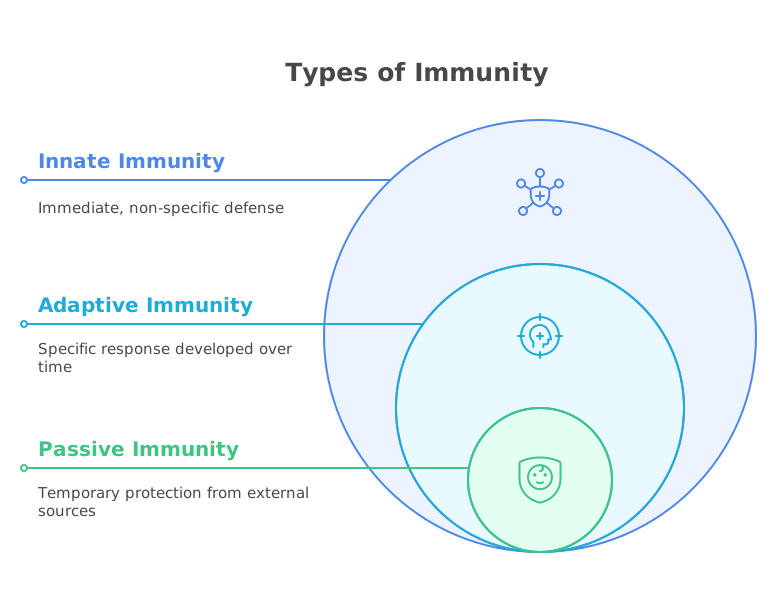
The immune system employs three types of immunity, each with a unique role:
Innate Immunity
Innate immunity, present from birth, provides rapid, broad protection through physical barriers and cells like phagocytes. It’s the body’s first responder, acting instantly to block pathogens.
Adaptive (Acquired) Immunity
Adaptive immunity develops over time through exposure to pathogens or vaccines. It’s highly specific, creating memory cells that enable quicker, stronger responses to repeat offenders.
Passive Immunity
Passive immunity offers temporary protection from external sources, such as antibodies passed from mother to baby via the placenta or breast milk, safeguarding infants until their own immunity matures.
Herd immunity is another critical concept. When most of a population is immune-often through vaccination-it limits disease spread, protecting vulnerable individuals and showcasing the societal benefits of having a strong immune system.
Immune System Disorders
When the immune system malfunctions, it can lead to several conditions:
Immunodeficiencies
These occur when immunity is weakened, either genetically (e.g., Severe Combined Immunodeficiency, SCID) or acquired (e.g., HIV). Secondary causes like malnutrition or chemotherapy also play a role. Treatments like immunoglobulin therapy can help, according to the Cleveland Clinic.
Autoimmunity
In autoimmune disorders, the immune system mistakenly targets healthy tissues. Examples include type 1 diabetes, lupus, and multiple sclerosis, often requiring immunosuppressive therapies to manage.
Hypersensitivity
Hypersensitivity involves exaggerated responses to harmless substances, leading to allergies ranging from mild (e.g., hay fever) to severe (e.g., anaphylaxis). Modern increases in allergies and autoimmunity may stem from reduced microbial exposure or lifestyle shifts.
Maintaining a Healthy Immune System
Looking for an immune system boost? Here are proven strategies to strengthen your defenses:
- Nutrition: A diet rich in fruits, vegetables, and nutrients like vitamins C and E, zinc, and selenium supports immunity. Iron is also vital for immune cell growth-supplements like those from Synevit, such as Ferrofect, can help maintain optimal levels, especially for those with dietary gaps.
- Exercise: Aim for 150 minutes of moderate activity weekly to enhance circulation and immune function. Balance is key, as overexertion can temporarily weaken defenses.
- Sleep: Getting 7-9 hours nightly aids cell regeneration and cytokine production, critical for immune responses.
- Stress Management: Chronic stress hampers immunity. Practices like meditation or yoga can counteract this, fostering a strong immune system.
- Vaccines: These prime the immune system to fend off specific diseases efficiently.
Vitamin D3 is another powerhouse for immune health, particularly in areas with limited sunlight. Synevit®’s Syncadol offers a reliable source, enhancing immune responses. Research highlighted in Synevit®’s press release praises Syncadol as an ideal supplement for boosting immunity, underscoring its value.
Key Takeaways
- The immune system safeguards us with a complex network of cells and organs.
- It combines innate and adaptive responses, building memory against future threats.
- Disorders span deficiencies, autoimmunity, and allergies, each with distinct challenges.
- A healthy lifestyle fuels a strong immune system for lasting vitality.
Frequently Asked Questions
- How can I improve my immunity?
Eat nutrient-dense foods, exercise regularly, prioritize sleep, reduce stress, and get vaccinated. Supplements like vitamin D3 can offer additional support-consult a healthcare provider first.
- What types of immunity are there?
Innate (immediate), adaptive (learned), and passive (temporary) immunity each protect us uniquely.
- Why is immunity important?
It prevents illness, speeds recovery, and enhances longevity by tackling threats effectively.
References
1. Immune System Cleveland Clinic
2. The Immune System NCBI