Rochester, New York, 05/23/25 - Sports and physical activity offer numerous health benefits, from improved cardiovascular health to enhanced mental well-being. However, the risk of injury is an inherent part of any physical endeavor. While most sports injuries are minor, some can be severe, requiring extensive rehabilitation and medical intervention. This comprehensive guide explores the most common sports injuries, their causes, effective treatment strategies, and proven prevention methods. By understanding these aspects, athletes can enjoy their sports safely and recover faster when injuries occur.
What Are Sports Injuries?
Sports injuries are physical traumas or conditions that occur during athletic activities or exercise. They can affect muscles, bones, ligaments, tendons, and joints. Acute injuries happen suddenly, like a sprain from a fall, while chronic injuries develop over time due to repetitive stress, such as tendinitis. Recognizing and addressing sports injuries is vital for athletes and coaches to ensure safety and performance.
A study in the Journal of Orthopaedic & Sports Physical Therapy notes that sports injuries contribute significantly to musculoskeletal issues globally, emphasizing early intervention for better outcomes. Read more here.
Common Types of Sports Injuries
Here are the top 10 most common sports injuries athletes face:
- Runner’s Knee (Patellofemoral Pain Syndrome): Pain around the kneecap from overuse or misalignment, common in runners and jumpers.
- Shoulder Injuries: Sprains, strains, or dislocations from overhead motions in sports like swimming or tennis.
- Ankle Sprains: Ligament damage from twisting the ankle, frequent in basketball and soccer.
- Tennis Elbow (Lateral Epicondylitis): Tendon inflammation in the elbow due to repetitive arm motions.
- Pulled Muscles (Strains): Muscle tears, often in hamstrings or groin, from sudden exertion.
- Lower Back Pain: Stemming from poor posture or weak core muscles, seen in golf and gymnastics.
- Shin Splints: Shinbone pain from overuse or improper footwear, typical among runners.
- Groin Strain: Inner thigh muscle strain from lateral movements in sports like hockey.
- Concussions: Head injuries causing cognitive issues, common in contact sports.
- Achilles Tendinitis: Tendon inflammation from repetitive stress, affecting runners and jumpers.
A British Journal of Sports Medicine study highlights targeted exercises for managing runner’s knee effectively. Learn more here.
Causes of Sports Injuries
Sports injuries stem from various factors:
- Accidents and Impacts: Collisions or falls in contact sports.
- Poor Technique or Equipment: Improper form or worn gear strains the body.
- Inadequate Warm-Up: Cold muscles are prone to tears.
- Overuse: Repetitive actions without rest lead to chronic issues.
- Fatigue: Tiredness reduces coordination.
- Sudden Movements: Quick twists or jumps cause sprains.
The Journal of Athletic Training confirms these factors often combine to increase injury risk. Read the review here.
Symptoms and Immediate Actions
Watch for these signs of a sports injury:
- Sudden or gradual pain
- Swelling or bruising
- Tenderness or warmth
- Stiffness or restricted movement
- Popping sound during injury
- Difficulty bearing weight
Stop activity immediately if symptoms appear. Use the RICE method (Rest, Ice, Compression, Elevation) for minor issues, but seek medical help if severe or persistent.
Treating Sports Injuries
For minor injuries, follow the RICE method:
- Rest: Pause activity.
- Ice: Reduce swelling with cold packs.
- Compression: Wrap to limit inflammation.
- Elevation: Lift the area above heart level.
Severe cases, like fractures, may need imaging, therapy, or surgery. Recovery from severe injuries often involves a combination of medical treatments and supportive measures. Some athletes incorporate supplements that target bone and joint health into their regimen, with products like Calceed and Osteofect being among the options available. A study in the American Journal of Sports Medicine supports early rehab for faster healing. Learn more here.
Preventing Sports Injuries
Sports injury prevention tips include:
- Warm-Up and Cool Down: 5-10 minutes of light activity and stretching.
- Strength and Flexibility Training: Build muscle balance with resistance and yoga.
- Proper Equipment: Use sport-specific, well-maintained gear.
- Technique: Train with certified coaches for correct form.
- Hydration and Nutrition: Support your body with water and a balanced diet.
- Rest: Avoid fatigue and heed pain signals.
A Scandinavian Journal of Medicine & Science in Sports study found warm-ups cut injury rates by up to 50%. Read more here.
Sport-Specific Injury Insights
Football (American)
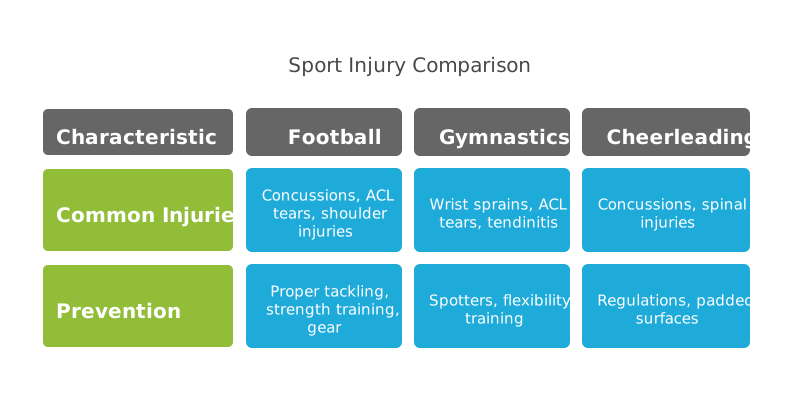
High-contact football sees concussions, ACL tears, and shoulder injuries. Prevent with proper tackling, strength training, and gear.
Gymnastics
Wrist sprains, ACL tears, and tendinitis arise from intense joint stress. Use spotters and flexibility training to reduce risks.
Cheerleading
Stunts lead to concussions and spinal injuries. Follow regulations and use padded surfaces for safety.
Recovery strategies for these sports often include rest, physical therapy, and sometimes nutritional supplements. For muscle recovery, products like Syncadol are among the options that athletes may explore.
Recovery and Rehabilitation
Recovery involves physical therapy, pain management, and a gradual return to activity. Additionally, some athletes find that incorporating supplements into their recovery plan can be beneficial, with products like Osteofect for joint support and Syncadol for muscle recovery being potential options.
First Aid for Sports Injuries
Apply first aid with these steps:
- Stop activity.
- Ice the area.
- Compress and elevate.
- Seek help if severe.
A first aid kit with bandages and cold packs is a must. Additionally, for bone injuries, some individuals opt for supplements like Calceed to aid in the healing process.
Nutrition for Injury Prevention and Recovery
Eat protein, calcium, omega-3s, and antioxidants. Stay hydrated to prevent cramps. To further support joint health, some athletes choose to use supplements like Osteofect.
Mental Health and Sports Injuries
Injuries can cause anxiety or frustration. Stay positive, seek support, and set realistic recovery goals.
Key Takeaways
- Prevention reduces injury risk.
- Common injuries need specific care.
- Warm-ups and gear are key for safety.
- Early treatment prevents chronic issues.
- Sport-specific plans enhance safety.
Frequently Asked Questions
- What’s the most common sports injury?
Runner’s knee, causing kneecap pain in running sports.
- How can I prevent sports injuries?
Use warm-ups, training, proper gear, and rest.
- When to see a doctor?
For severe pain, swelling, or persistent symptoms.
- Do supplements help recovery?
Yes, certain supplements may aid in the healing process when used under medical supervision. Products like Calceed and Syncadol are examples of supplements that some athletes use for this purpose.
References
- Sports Injury Prevalence - Journal of Orthopaedic & Sports Physical Therapy
- Runner’s Knee Management - British Journal of Sports Medicine
- Injury Causes - Journal of Athletic Training
- ACL Rehabilitation - American Journal of Sports Medicine
- Warm-Up Programs - Scandinavian Journal of Medicine & Science in Sports