Rochester, New York, 3/19/26 - Spring is supposed to feel lighter. The weather shifts, days get longer, and many people expect their energy to bounce back automatically. But when that does not happen, nutrient status often enters the conversation. After a long winter of indoor routines, less sunlight, and less consistent eating habits, low vitamin D, iron, or vitamin B12 can feel a lot more noticeable than it did a few months earlier.
People use the phrase "spring vitamin deficiency" because the pattern feels familiar. Winter habits, lower sunlight exposure, heavier comfort-food routines, less outdoor movement, and inconsistent meal quality can all catch up at the same time. Vitamin D is usually the headline, but iron, vitamin B12, folate, and other nutrients can also be part of the picture. The useful question is not just what feels off, but what practical steps actually help.
Why Spring Is When Deficiencies Often Get Noticed
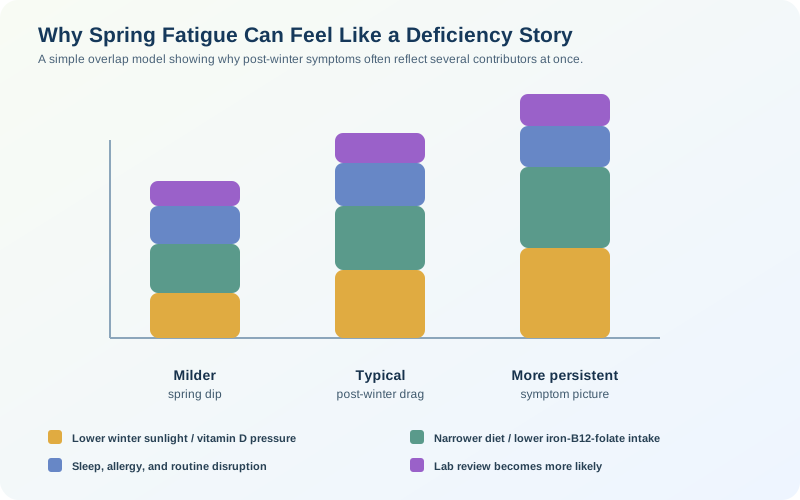
Winter changes behavior in quiet ways. People spend less time outside, eat fewer fresh foods in some households, move less, sleep differently, and often let routines slide. None of that guarantees a deficiency, but it can make a marginal nutrient status more likely to stay marginal for several months. Then spring arrives and creates a contrast: everyone expects to feel refreshed, so fatigue or low mood stands out more sharply than it did in January.
That contrast matters because people often interpret spring tiredness too simply. They may assume it is only allergies, only stress, or only a leftover winter slump. Sometimes that is true. But sometimes spring is simply when a low vitamin D pattern, borderline iron stores, or a poor winter eating routine finally becomes hard to ignore. If you want the broader deficiency basics before narrowing in on seasonality, Synevit's Uncovering Vitamin Deficiencies: Symptoms, Causes, and Solutions lays out that foundation clearly.

Vitamin D Usually Leads the Conversation
Vitamin D is the nutrient most people think about first in spring, and that is reasonable. The NIH Office of Dietary Supplements notes that vitamin D can be obtained from sunlight exposure, food, and supplements, but many people do not get enough from food alone (NIH ODS: Vitamin D). After a long winter of indoor routines, shorter days, and less consistent sun exposure, spring may be the point when low vitamin D status feels harder to ignore.
Seasonal variation studies reinforce that idea. One PubMed-indexed study in older adults found vitamin D levels remained below common sufficiency targets through all seasons in that cohort, which is a useful reminder that the calendar alone does not correct low status (PubMed: 29104377). In practical terms, the first warm week of spring does not automatically erase a winter-long deficit. If you want a plain-language look at where vitamin D comes from and why sunlight is only part of the story, Synevit's Sun Exposure and Vitamin D is worth reading.
Iron, B12, and Folate Can Look Similar at First
Vitamin D is not the only spring issue worth considering. Iron deficiency, low vitamin B12, and low folate can all create symptoms that people describe in vague language: "I am dragging," "my workouts feel harder," "I cannot focus," or "I look tired all the time." That overlap is why self-diagnosis gets messy. Iron-related fatigue may feel similar to winter burnout. B12-related low energy may get blamed on stress. Folate-related anemia symptoms may be subtle at first.
The Cleveland Clinic notes that vitamin deficiency anemia may cause fatigue, dizziness, palpitations, muscle weakness, numbness or tingling, pale skin, and shortness of breath, among other symptoms (Cleveland Clinic: Vitamin Deficiency Anemia). The NIH Office of Dietary Supplements also explains that iron deficiency exists on a spectrum and can progress from lower stores to more obvious anemia-related symptoms (NIH ODS: Iron). That is one reason spring fatigue should be interpreted with a little discipline rather than as a quick social-media diagnosis.
Why Spring Symptoms Are Easy to Misread
Spring is full of confounders. Allergy season can disrupt sleep and make people feel foggy. Schedule changes often increase activity too quickly after a slower winter. Some people eat lighter meals without actually improving nutrient quality. Others start new exercise routines, sweat more, and underestimate hydration. All of that can produce fatigue, headaches, dizziness, or reduced recovery without a true deficiency.
At the same time, deficiency symptoms are often nonspecific enough to hide in plain sight. Low vitamin D may present as general low energy or muscle discomfort. Iron deficiency may show up as poor stamina or shortness of breath with effort. Low B12 may feel like exhaustion plus tingling or concentration trouble. None of those patterns are definitive on their own, which is exactly why a thoughtful workup matters more than assuming one supplement will fix everything.
Who May Need Closer Attention
Some groups have more reason to pay attention in spring than others. People who spend most of winter indoors, people with limited dietary variety, older adults, people with heavier menstrual blood loss, strict dieters, and those with digestive or absorption issues may all have more reason to ask whether nutrient status has slipped. People who already entered winter with low stores are also more likely to notice problems once several low-exposure months pass.
This does not mean everyone in those groups should assume deficiency. It simply means the threshold for checking in may be lower. If there has been persistent fatigue, pale skin, low exercise tolerance, tingling, frequent cramps, or a diet that has been consistently narrow for months, a clinician may decide that labs are more useful than trial-and-error supplementation. When the picture feels broad rather than tied to one obvious issue, Synevit's Mineral Deficiency Guide helps round out the conversation.
Food, Sunlight, and Supplement Next Steps
The most reasonable next step is usually to clean up the basics before overcomplicating the plan. That means a steadier meal pattern, more iron-aware and protein-aware meals where appropriate, a realistic mix of leafy greens, legumes, fortified foods, eggs, dairy or alternatives, and more regular outdoor time when possible. Spring often improves appetite and activity naturally, which can help correct mild intake issues if the diet actually becomes more complete rather than simply lighter.
If symptoms are persistent, a healthcare professional may decide to check iron markers, vitamin D, B12, folate, or related labs depending on the situation. Supplement use should be guided by that context. Vitamin D is common, but dose still matters. Iron can help the right person and be unnecessary for the wrong one. B12 can be useful, but not every tired person needs it. In other words, spring is a good time for targeted action, not random stacking.
Why Quality and Consistency Still Matter
Even when someone truly needs support, consistency usually matters more than hype. A supplement routine only helps if it is clear, tolerable, and easy to maintain. That is part of why Synevit's educational content often focuses on practical quality issues such as ingredient form, coating, release behavior, and packaging protection. Those details are not marketing decoration; they are often what separates a short-lived attempt from a routine a person can actually follow.
Spring tends to reset health goals for a lot of people, and that can be useful if the reset is realistic. Instead of chasing every "detox" or miracle fix, it is usually smarter to combine better meals, more daylight, a little patience, and targeted testing when symptoms do not add up. That is the kind of steady approach that makes seasonal health feel manageable rather than dramatic.
Key Takeaways
- "Spring vitamin deficiency" is not a formal diagnosis, but spring often reveals winter-long low nutrient patterns more clearly.
- Vitamin D is the most common spring talking point because winter sunlight exposure is often limited.
- Iron, B12, and folate can also contribute to fatigue, low stamina, and brain fog that people may misread as ordinary seasonal stress.
- Allergies, poor sleep, and abrupt activity changes can mimic deficiency symptoms, so context matters.
- The best next step is usually a mix of better routine, better meals, and targeted testing when symptoms persist.
Frequently Asked Questions
- Is spring vitamin deficiency a real medical diagnosis?
No. It is better understood as a seasonal pattern where low vitamin or mineral status may become more noticeable after winter habits and low sunlight exposure.
- Why does vitamin D come up so often in spring?
Because many people get less sun exposure during winter, and food alone often does not fully cover vitamin D needs.
- Can spring fatigue be caused by something other than deficiency?
Yes. Allergies, sleep changes, stress, dehydration, and sudden increases in activity can all create similar symptoms.
- Should I start multiple supplements if I feel run down in spring?
Usually not without context. It is better to review diet, symptoms, and possible lab work first so the plan is targeted rather than random.
References
1. NIH Office of Dietary Supplements: Vitamin D Fact Sheet for Health Professionals
2. Seasonal Variation in Vitamin D in Association with Age and Lifestyle Factors (PubMed: 29104377)
3. NIH Office of Dietary Supplements: Iron Fact Sheet for Health Professionals
5. NIH Office of Dietary Supplements: Vitamin B12 Fact Sheet for Health Professionals