Rochester, New York, 3/19/26 - People who start diabetes medications or newer weight-loss therapies usually pay attention to blood sugar, appetite, and the number on the scale first. That makes sense. But after a few weeks or months, many start asking a different question: why do energy, hair, recovery, or day-to-day strength suddenly feel off? That is usually the point where nutrient status becomes harder to ignore. When appetite drops, meals get smaller, or food tolerance changes, it becomes easier to miss nutrients the body still depends on every day.
That is especially relevant for people on longer-term plans, including metformin and GLP-1-based therapies used for diabetes or weight management. In real life, this is rarely just a medication story. It is also a food-pattern story, a tolerance story, and a follow-up story. That is why a smarter plan keeps an eye on iron, vitamin D3, vitamin B12, folate, and a few related nutrients in a steady, practical way. For a broader look at nutrition support around blood sugar, Synevit's The Ultimate Guide to Blood Sugar Supplements for Diabetes Management is a natural next read.
Why This Topic Comes Up So Often
The short version is that diabetes care and nutrient status already overlap before any medication enters the picture. A 2023 review on vitamins and diabetes notes that people with diabetes are often discussed in the context of lower status in several vitamins, while metformin in particular has been linked to reduced absorption of folate and vitamin B12 in some patients (PMC10146464). That is one reason nutrition and follow-up keep coming back into the conversation.
There is also a practical day-to-day reason this topic keeps resurfacing. Many people on appetite-lowering therapies eat less, skip meals, tolerate only a narrower range of foods for a while, or become inconsistent with protein-rich and iron-rich meals. A recent cross-sectional study of GLP-1 receptor agonist users reported inadequate intake of several nutrients, including iron and vitamin D, relative to dietary recommendations (PubMed: 40352260). That finding should be read carefully because low intake is not the same thing as laboratory-confirmed deficiency, but it is still a reasonable signal to pay attention instead of assuming weight loss automatically means nutritional status is improving.

Metformin, B12, and Folate: The Best-Known Connection
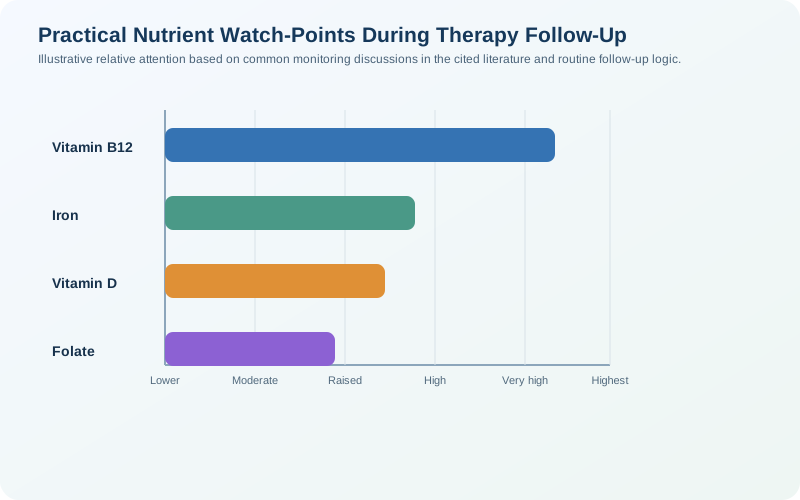
If one medication-nutrient relationship is discussed more than any other in diabetes care, it is metformin and vitamin B12. Multiple studies and reviews have reported an association between longer or higher-dose metformin use and lower vitamin B12 status, and one PubMed-indexed study found higher odds of deficiency with longer duration and larger daily doses (PubMed: 25045229). That makes B12 one of the clearest nutrients to keep on the radar during longer-term follow-up.
Folate often enters the same conversation because B12 and folate overlap in red blood cell production, homocysteine metabolism, and anemia-related workups. In everyday terms, this is why fatigue, tingling, or a run-down feeling should not be brushed off too quickly. It is also why broader deficiency education still helps; Synevit's article Uncovering Vitamin Deficiencies: Symptoms, Causes, and Solutions gives a wider overview of what these patterns may look like beyond a single diagnosis.
Iron, Vitamin D3, and Other Nutrients to Watch
Iron and vitamin D3 deserve their own section because they come up for different reasons. Iron deficiency is not usually framed as a classic direct effect of diabetes medication the way B12 is with metformin. Instead, iron can become more relevant when appetite is lower, meals are less balanced, heavy menstrual losses are present, or a person already had borderline stores before starting treatment. The NIH Office of Dietary Supplements notes that iron deficiency ranges from depleted iron stores to full iron-deficiency anemia, and symptoms may include fatigue, reduced exercise tolerance, and trouble concentrating (NIH ODS: Iron). If anemia is part of the picture, Synevit has a separate practical overview in Effective Ways to Fix Anemia.
Vitamin D is a little different. The question here is not usually whether diabetes medication directly depletes vitamin D3, but whether low vitamin D status may already be common in this population and worth identifying. Reviews have described an association between low vitamin D levels and diabetes risk or complications, although supplementation outcomes remain mixed and should not be oversold (PMC9671203). In everyday language, D3 is often the supplement form people mean when they say "vitamin D." For a plain-language look at sunlight, food sources, and vitamin D basics, Synevit's Sun Exposure and Vitamin D fills in that background well.
How Weight-Loss Therapies May Change Nutrient Intake
For people using weight-loss therapy, the nutrition issue is often behavioral and mechanical before it is biochemical. Smaller portions may mean less red meat, fewer legumes, fewer dairy servings, or less overall variety. Nausea, early fullness, or food aversions may push someone toward easy foods that are lower in iron, protein, and micronutrients. Over a few months, that pattern may matter even if the medication itself is doing what it is supposed to do metabolically.
This is one reason a good plan looks beyond calories. A lighter appetite can be helpful for weight loss, but it can also unintentionally reduce intake of iron, vitamin D, calcium, magnesium, B12, and protein. The recent GLP-1 intake study should not be treated as proof that every user develops deficiency, but it does reinforce the idea that structured nutrition follow-up may be sensible, especially in people who are losing weight quickly or who already started with lower food variety (PubMed: 40352260). In other words, better metabolic numbers and weaker nutrient intake can happen at the same time if the plan is not thought through.
When Symptoms and Lab Testing Deserve a Closer Look
Fatigue is the symptom that creates the most confusion here because it is so nonspecific. People may also notice dizziness, brittle nails, colder hands and feet, lower exercise tolerance, numbness or tingling, muscle weakness, low mood, or a general sense that recovery is slower than expected. None of those signs confirm a deficiency by themselves. They may also overlap with blood sugar changes, under-eating, sleep disruption, stress, or dehydration.
That is why this is usually a lab conversation rather than a guessing game. If someone has persistent symptoms, a clinician may consider checking markers such as B12, iron studies, complete blood count, folate, or vitamin D depending on the history. The goal is to avoid missing something correctable before it becomes a bigger issue. This is especially relevant for people with long-term metformin use, people with restrictive intake, and people whose symptoms are out of proportion to what would normally be expected from appetite suppression alone.
Practical Next Steps Without Overreacting
A balanced response usually works better than a reactive one. Start with food quality and consistency: protein with meals, iron-rich foods where appropriate, enough total calories, and a realistic plan for vegetables, legumes, dairy or fortified alternatives, and sunlight-aware vitamin D routines. If symptoms persist or the diet has narrowed substantially, ask for labs rather than stacking multiple supplements at random. More is not always better, especially with iron and fat-soluble vitamins.
From Synevit's perspective, this is where formulation quality and tolerability still matter. A supplement only helps if a person can stay consistent with it, and consistency is often shaped by dose design, bioavailability, and whether the product is comfortable to take. That is why so much of the brand's educational content keeps returning to practical issues like release profile, stability, and ingredient selection instead of relying on generic wellness language. For people on diabetes or weight-loss therapies, that kind of steady, measured approach usually makes more sense than chasing every trend at once.
Key Takeaways
- Metformin is the best-known diabetes medication linked to lower vitamin B12 status in some people.
- Iron and vitamin D3 concerns are often tied to overall intake patterns, baseline status, and follow-up habits rather than a single direct medication effect.
- Weight-loss therapies may narrow food intake enough to make nutrient gaps more likely if meals are not planned well.
- Fatigue, tingling, weakness, or hair changes are not diagnostic, but they may justify lab review in the right context.
- A practical plan usually combines food quality, clinician-guided testing, and only targeted supplementation when needed.
Frequently Asked Questions
- Do diabetes medications directly cause vitamin deficiencies?
Not always. Some medication-nutrient links are stronger than others. Metformin and lower vitamin B12 status is the clearest example, while other nutrient issues may be more related to appetite changes, food avoidance, or baseline deficiency risk.
- Why are iron and vitamin D discussed in people on weight-loss therapies?
Because lower appetite and smaller meals may reduce intake of important nutrients over time, and many people already begin treatment with less-than-ideal nutrient status.
- Should everyone on metformin take B12 automatically?
Not necessarily. Many clinicians prefer monitoring first, then supplementing when labs, symptoms, or risk factors support it.
- What is the smartest first step if symptoms show up?
Review food intake, medication timing, and recent symptoms with a healthcare professional and ask whether targeted lab testing makes sense before adding multiple supplements.