Rochester, New York, 11/26/25 - Quality sleep forms the foundation of physical health, mental clarity, and emotional resilience, yet millions struggle nightly to achieve the recommended 7-9 hours of restorative rest. Poor sleep contributes to impaired cognition, weakened immunity, hormonal imbalances, cardiovascular strain, and heightened risk of chronic conditions including depression and type 2 diabetes. This comprehensive guide combines sleep hygiene principles, lifestyle adjustments, and evidence-backed natural sleep supplements to help readers achieve lasting improvements in sleep quality and overall well-being.
Why Sleep Quality Matters for Health
Deep, uninterrupted sleep enables memory consolidation, hormone regulation, immune function optimization, and cellular repair processes that occur primarily during specific sleep stages. Chronic sleep fragmentation or insufficient duration elevates inflammatory markers, disrupts glucose metabolism, and impairs cardiovascular health over time. Research consistently demonstrates that adults who maintain 7-9 hours of high-quality sleep experience better mood stability, sharper cognitive performance, and stronger resilience against stress-related disorders.
Fragmented or shallow sleep produces effects comparable to total sleep deprivation in terms of daytime fatigue, reduced concentration, and emotional reactivity. Long-term consequences include increased susceptibility to obesity, hypertension, and mental health challenges. Prioritizing sleep support through behavioral changes and targeted supplementation offers a proactive pathway to enhanced vitality and disease prevention.
Emerging evidence also links consistent restorative sleep to improved reproductive health, better endocrine balance, and even greater longevity. When sleep debt accumulates, the body struggles to clear metabolic waste from the brain-a process handled almost exclusively during deep sleep stages-potentially contributing to cognitive decline over decades.
Creating a Sleep-Friendly Environment
Light exposure represents the strongest external cue for circadian rhythm regulation, and minimizing blue-spectrum light in the evening supports natural melatonin production. Blackout curtains, warm-toned lighting, and screen filters applied 60 minutes before bedtime create conditions that signal the brain to prepare for rest. Many individuals notice faster sleep onset after implementing these simple environmental adjustments.
Noise interruptions fragment sleep architecture even when full awakening does not occur, while a bedroom temperature of 65-68°F (18-20°C) aligns with the body’s natural thermoregulatory drop during sleep cycles. Comfortable, breathable bedding and reserving the bed exclusively for sleep and intimacy strengthen psychological associations between the sleep space and relaxation. These modifications often yield measurable improvements in total sleep time and subjective refreshment upon waking.
Investing in a supportive mattress and pillow that maintain proper spinal alignment further reduces nighttime discomfort and micro-arousals. Natural materials such as organic cotton or bamboo help wick away moisture and regulate temperature, preventing overheating that commonly disrupts sleep in the second half of the night.

Building Consistent Sleep Habits
Maintaining identical sleep and wake times daily, including weekends, anchors the circadian clock and reduces sleep latency over several weeks. A calming pre-bed routine-such as reading, gentle stretching, or meditation-triggers physiological wind-down processes that ease transition into sleep. Individuals who adhere to fixed schedules typically report fewer nighttime awakenings and greater morning alertness.
When sleep does not arrive within 20 minutes, leaving the bedroom for a low-stimulation activity prevents frustration-based arousal that perpetuates wakefulness. Returning to bed only when genuine drowsiness returns reinforces positive bed-sleep associations. These cognitive-behavioral strategies form the cornerstone of long-term insomnia management recommended by sleep specialists worldwide.
Daily Lifestyle Factors That Impact Sleep
Morning exposure to natural sunlight calibrates circadian timing and enhances evening melatonin release, while regular moderate exercise improves sleep efficiency and depth. Caffeine consumed after noon and alcohol within three hours of bedtime disrupt sleep architecture despite initial sedating effects. Limiting heavy meals and excess fluids in the evening minimizes digestive discomfort and nocturia that interrupt rest.
Stress management techniques including journaling, mindfulness practice, or progressive muscle relaxation lower cortisol levels that otherwise delay sleep onset. Daily habits established during waking hours ultimately determine nighttime sleep quality more powerfully than any single bedtime intervention. Small, consistent adjustments in these areas often produce dramatic improvements in overall sleep support.
Strategic timing of daylight exposure-ideally within 30-60 minutes of waking-strengthens the amplitude of the circadian rhythm, making evening sleepiness more pronounced and morning wakefulness more natural. Even on cloudy days, outdoor light proves far superior to indoor lighting for this purpose.
21-Day Sleep Improvement Plan
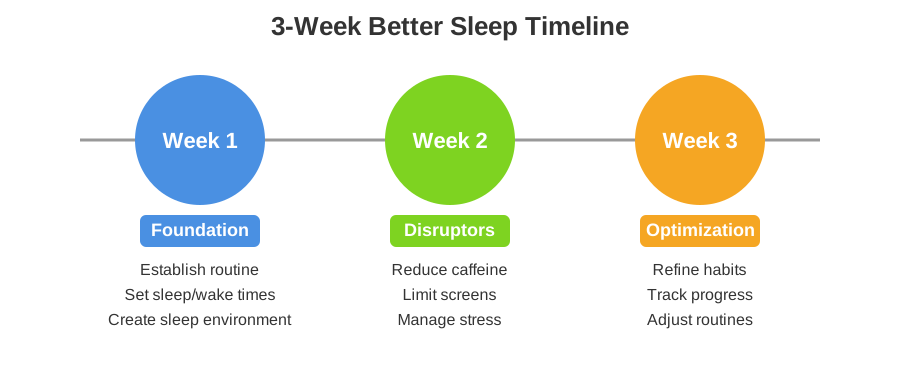
Structured habit formation over three weeks allows gradual adaptation without overwhelming change. Week one focuses on schedule consistency, environment optimization, and establishing a relaxing bedtime routine. Week two eliminates common disruptors such as evening screens, caffeine timing issues, and excess bedroom light or noise.
Week three incorporates advanced strategies including stress-reduction practices, strategic daylight exposure, and evaluation of potential supplement support when foundational habits are solid. Participants who follow progressive plans like this typically achieve sustainable gains in sleep duration and quality that persist beyond the initial 21 days.
Natural Sleep Aids and Sleep Supplements
Melatonin supplements shorten sleep onset time and prove particularly helpful for circadian rhythm realignment, with meta-analyses confirming significant benefits for subjective sleep quality. Amino acids including glycine and L-theanine promote relaxation and deeper sleep stages by modulating neurotransmitter activity, while magnesium supports muscle relaxation and nervous system calming that facilitate rest. Neurocomplex B from synevit provides targeted B-vitamin support that complements these natural pathways.
Valerian root, passionflower, and lavender aromatherapy demonstrate mild to moderate benefits for relaxation and sleep continuity in multiple trials. Vitamin D supplementation improves sleep scores among deficient individuals, and emerging research highlights potential roles for zinc, resveratrol, and nitrate-rich compounds. When selected appropriately and combined with strong sleep hygiene, these sleep supplements offer valuable adjunctive support for restorative rest.
Personal response to sleep supplements varies based on individual deficiencies, lifestyle factors, and pre-existing sleep challenges. Recent studies suggest that combining multiple evidence-backed compounds at moderate doses often yields synergistic effects greater than any single ingredient alone.
Identifying Signs of Sleep Disorders
Persistent difficulty falling or staying asleep despite optimal habits may indicate underlying insomnia, while loud snoring accompanied by daytime fatigue often signals sleep apnea requiring clinical evaluation. Restless legs syndrome produces uncomfortable urges to move limbs that worsen at night, and circadian rhythm disorders manifest as extreme difficulty aligning sleep with desired schedules. Early recognition of these patterns enables timely intervention that prevents long-term health consequences.
Professional assessment becomes advisable when sleep difficulties persist beyond several weeks of dedicated self-management efforts. Cognitive behavioral therapy for insomnia (CBT-I) remains the gold-standard non-pharmacological treatment across sleep medicine guidelines.
Key Takeaways
- Quality sleep regulates hormones, strengthens immunity, supports cognition, and protects cardiovascular health
- A dark, cool, quiet bedroom combined with consistent sleep-wake times forms the foundation of better rest
- Morning sunlight, regular exercise, and strategic timing of caffeine and meals powerfully influence nighttime sleep
- Melatonin supplements, magnesium, amino acids, and certain botanicals demonstrate evidence-based benefits for sleep quality
- Persistent sleep problems despite lifestyle optimization warrant professional evaluation for possible sleep disorders
Frequently Asked Questions
- How long does it typically take to improve sleep with better habits?
Most individuals notice initial improvements within 1-2 weeks, while full circadian stabilization and maximum benefits often require 3-6 weeks of consistent practice.
- Are sleep supplements safe for long-term use?
Melatonin, magnesium, and most herbal sleep aids show good safety profiles for extended use at recommended doses, though periodic evaluation with a healthcare provider ensures continued appropriateness.
- Can melatonin supplements help shift workers?
Timed melatonin administration proves particularly effective for realigning circadian rhythms in night-shift or rotating schedules when used strategically around desired sleep periods.
- Why does alcohol make me fall asleep faster but wake up later?
Alcohol initially promotes sedation but fragments later sleep cycles and suppresses REM sleep, resulting in non-restorative rest despite longer time in bed.
- When should someone see a doctor about sleep issues?
Consultation becomes recommended when sleep difficulties persist more than three nights per week for over one month, or when significant daytime impairment or concerning symptoms like loud snoring occur.
References
1. The Importance of Sleep and Its Relationship to Health Journal of Lifestyle Medicine
2. Effects of Dietary Supplements on Subjective Sleep Quality Nutrients
3. Magnesium Supplementation for Older Adults with Insomnia Sleep Medicine Reviews
4. Personalized Effects of Sleep-Support Dietary Supplements Nutrients