Rochester, New York, 2/26/26 - Coated vs uncoated tablets is more than a manufacturing detail. For many people, especially those using sensitive stomach vitamins, tablet form may affect daily stomach comfort. If a supplement causes discomfort, people are less likely to stay on routine, even when the formula itself is useful.
The short answer: Uncoated tablets usually break down quickly after swallowing. Coated tablets add an outer layer that may improve swallowing, mask taste, or change where and how quickly ingredients are released. Enteric-coated tablets are designed to delay release until they move past the stomach, which is why they're often preferred when stomach comfort matters.
This guide explains how coated tablets and uncoated tablets differ, why some vitamins upset the stomach, and what practical steps may reduce irritation. It also shows why enteric coating is often preferred when stomach comfort matters, as well as preserving the potency of active ingredients.
Coated vs Uncoated Tablets: The Basic Difference
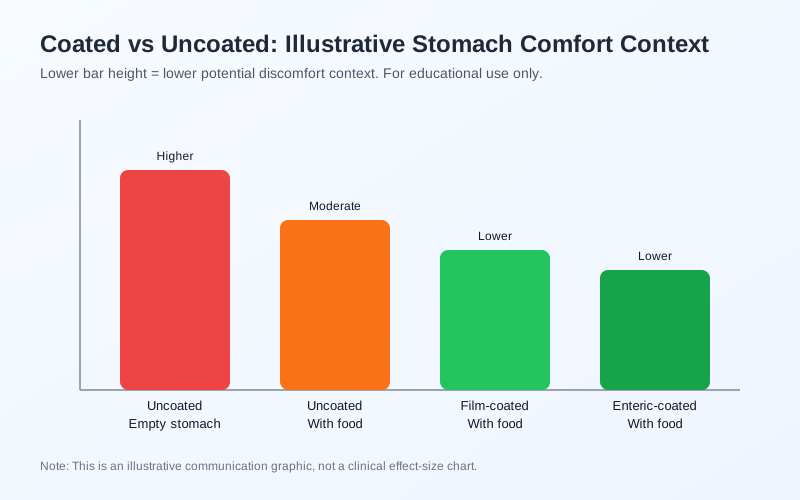
Uncoated tablets usually break down quickly after swallowing. That can be useful in some cases, but for sensitive consumers it may increase stomach irritation. Coated tablets add an outer layer that may improve swallowability, mask taste, and change where or how quickly ingredients are released.
In practice, coated vs uncoated tablets mostly differ by the factor of release and dissolving. Film-coated and enteric coated tablets are both coating strategies, but they serve different purposes. Film coating often helps with handling and swallowing, while enteric coating is designed to delay release until the tablet moves past the stomach into the duodenum and the small intestines.
Why Do Some Vitamins Upset the Stomach?
The question "why do some vitamins upset my stomach" often comes down to dose concentration, timing, and ingredient profile. Taking supplements on an empty stomach, taking multiple products at once, or using ingredients known to cause gastrointestinal (GI) sensitivity may increase discomfort in some users.
NIH Office of Dietary Supplements resources note that certain nutrients can cause GI discomfort symptoms if taken in higher doses, including nausea or abdominal discomfort, which is relevant for common categories like iron and zinc (NIH ODS: Iron; NIH ODS: Zinc).
Where Coated Tablets May Help
For users with sensitive stomachs who take vitamins routinely, taking coated tablets may improve tolerability by reducing immediate stomach contact. Enteric coated tablets in particular have delayed release until a higher-pH environment, which may lower stomach exposure for certain ingredients. A classic pharmaceutical study on enteric systems explains how coating behavior influences release and stability (PubMed: 320832).
If you want a more technical breakdown of delayed-release and enteric systems, you can read Synevit's release article Enteric Coated Tablets and Slow-Release Iron.
Why Enteric-Coated Tablets Often Feel Better
Enteric-coated tablets are built to pass through the stomach before releasing active ingredients in the small intestine. For people who experience nausea or upper-GI irritation associated with fast tablet disintegration, that delayed release may feel more comfortable in daily use.
This is one reason Synevit's team often leans toward enteric and release-controlled design in key formulations: the goal is not only ingredient strength and integrity, but also better tolerability and consistency.
How to Reduce Stomach Discomfort From Supplements
Most of the stomach discomfort can often be reduced with simple intake adjustments:
- We always highly recommend to take supplements with food unless label guidance says otherwise.
- Avoid taking several high-potency products at the exact same time.
- Always use a full glass of water and avoid taking tablets right before lying down.
- If symptoms persist, discontinue using supplements and immediately contact a healthcare professional.
How Synevit's Team Approaches Coated vs Uncoated Design
Synevit's team always evaluates supplement's format as part of their quality model, where formula, tablet release behavior, and packaging are tested following strict production regulation. That same approach appears across the brand's educational content, including this overview of how packaging may help slow supplement degradation.
For iron support specifically, products such as Ferrofect are positioned with serious consideration to bioavailability and tolerability.
Key Takeaways
- Coated tablets and uncoated tablets differ mainly by their release behavior.
- Enteric-coated tablets may help reduce stomach discomfort.
- Consumers and patients with sensitive stomach could benefit from routine vitamin intake during or after a meal.
- Making the right choice depends on formula, dose, and user tolerance.
- Choosing quality supplements with coated and time-release tablets and true pharmaceutical blister packaging may result in better performance and higher efficacy.
Frequently Asked Questions
- Which is better: coated or uncoated tablets?
It depends on the ingredient and the user. Coated tablets may improve tolerability for some people, while uncoated tablets may be acceptable when ingredients are well tolerated.
- Do uncoated tablets always cause stomach discomfort?
No. They do not always cause discomfort. Risk varies by ingredient profile, dose, and whether supplements are taken with or without food.
- What is the difference between film-coated and uncoated tablets?
Film-coated tablets include an outer layer that may improve handling, taste and release behavior; uncoated tablets usually disintegrate faster after ingestion.