Rochester, New York, 4/22/25 Imagine peeling back a foil seal and finding exactly one pill in its own bubble-every time. That’s blister packaging in action! Over 80% of solid-dose medications ship this way, and for good reason. These sealed cavities lock out moisture, light and air-preserving potency and safety. Want the deep dive? Start with Wikipedia’s overview, or see the FDA’s airtight standards in their container closure guidance.
What Is Blister Packaging In Pharmaceutical Industry
At its essence, blister packaging means each tablet or capsule lives in its own sealed pocket-plastic, aluminum or foil laminated to guard against moisture, light and contamination. That single-dose format brings unit-dose accuracy: you grab one bubble, break the seal, and you’re ready-no mix-ups, no double-doses. It’s a game-changer for pharmacies, hospitals and patients alike.
History & Evolution Of Blister Packaging
The concept dates back to the 1960s, when pharmaceutical innovators first molded PVC into small cavities for contraceptive tablets. Early thermoforming machines used heat to shape plastic sheets into pockets. By the 1970s, cold-form foil emerged, stamping aluminum laminates into moisture-resistant seals. Over decades, automation and vision-system inspections have made blister lines faster, more reliable and capable of handling millions of doses per hour. Today’s smart machines integrate serialization and tamper-evidence, all while meeting global GMP standards-yet the core idea remains wonderfully simple: one dose, one bubble.
Materials & Manufacturing Methods
Most blister packs start with PVC or PET films that are thermoformed-heated into cavities-then sealed with aluminum foil. Thermoforming offers transparency so pharmacists can inspect tablets visually. Cold-form aluminum, on the other hand, stamps foil laminates directly, creating superior moisture and oxygen barriers for ultra-sensitive drugs. Both methods end with heat sealing and precision cutting; advanced lines even use robotics to load cavities and AI vision to catch tiny defects before packaging ships.
What Are Blister Packaging in Pharmacy
Blister packs come in three main styles:
Unit-Dose Strips: Simple rows or cards, one pill per pocket for straightforward dispensing.
Calendar/Compliance Packs: Bubbles marked with days or dates to guide complex regimens.
Clamshell Trays: Rigid, hinged designs for medical devices, kits and diagnostics.
Each format is engineered for maximum convenience-whether you’re at home, in the clinic or on the go.
How To Open Blister Packaging
Flex the card gently along the perforation to loosen the seal.
Peel back one corner of the foil or plastic lid until the cavity edge is exposed.
Press your pill through the bubble-steady, firm pressure until it drops into your palm.
Pro Tip: If the foil resists, use a small letter opener or safety cutter to lift the edge cleanly!
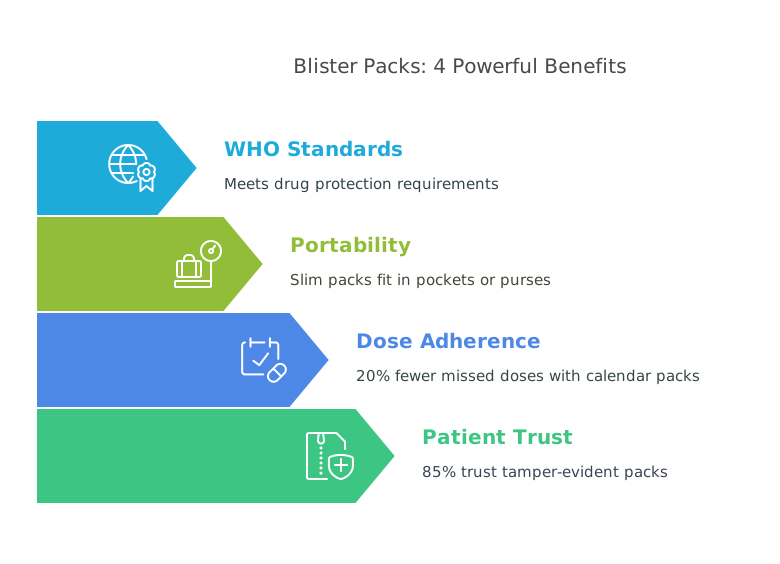
Benefits Of Blister Packaging
Tamper Evidence & Safety
Tamper-evident seals make it obvious if anyone’s meddled with your medication-critical for patient trust.
Dose Accuracy & Adherence
Pre-measured cavities remove guesswork, slashing missed or extra doses and boosting compliance rates.
Portability & Travel
Slim, lightweight cards slip into pockets or purses-no bulky bottles taking up precious space.
Blister packaging also aligns with global standards for pharmaceutical quality. The World Health Organization’s Guidelines on Packaging for Pharmaceutical Products highlight that packaging must protect drugs from moisture, light, and contamination while ensuring ease of use (WHO, 2002). Blister packs meet these standards with their sealed, unit-dose design, safeguarding both patient safety and medication integrity.
Curious how Synevit packaging keeps supplements fresher, longer? Check out our Press Release for real-world data on how our blister design slows degradation-backed by lab testing and shelf-life studies.
Applications In Today’s Pharmacy
Blister packs are ubiquitous in modern healthcare settings. Community pharmacies often pre-pack chronic medications into calendar cards to enhance adherence. Hospitals utilize ICU-ready trays with IV drugs and emergency doses, while home-care programs mail compliance strips to elderly patients. Notably, a randomized controlled trial in Malaysia demonstrated that calendar blister packaging significantly improved medication adherence and reduced treatment costs among hypertensive patients (Tan et al., 2017). Additionally, a study in New Zealand found that using calendar blister packs led to significant reductions in HbA1c and diastolic blood pressure in patients with type 2 diabetes (Kenealy et al., 2000). These examples underscore the versatility and precision of blister packaging in enhancing medication management across various healthcare environments.
As packaging continues to evolve, so do the ways we apply it. From sustainability to shelf stability, innovations are reshaping pharmacy logistics. We’re documenting these shifts in real time-dive into our full Press Releases archive to see how packaging science meets patient-centered care.
Key Takeaways
One dose, one sealed bubble: unmatched accuracy.
Tamper-evidence builds patient confidence.
Slim design boosts portability and compliance.
Materials and methods evolve-thermoform for visibility, cold-form for barrier strength.
Frequently Asked Questions
- Can children open blister packs easily?
Many packs include child-resistant foils or push-through strength adjustments. Always check the packaging label for age-specific designs.
- Do blister packs expire faster once opened?
Once you pierce the seal, that cavity should be used immediately. Unopened cavities retain their barrier properties for the full shelf life.
- Are blister packs recyclable?
Most thermoformed PVC/PET blisters and foil laminates require specialized recycling streams. Check local guidelines for pharmaceutical packaging recycling.
Ready to experience blister packaging that truly puts patients first? Let’s make every dose count!
References
-
1. Tan, C. S., Hassali, M. A., Neoh, C. F., Saleem, F., & Shafie, A. A. (2017). Efficacy and costs of calendar blister packaging intervention among hypertensive patients in Malaysia: A randomized controlled trial. Patient Preference and Adherence, 11, 373-382.
-
2. Kenealy, T., Arroll, B., & Petrie, K. (2000). Patients and general practitioners' views of the use of calendar blister packs for patients with type 2 diabetes. Journal of Primary Health Care, 2(2), 123-128.
-
3. World Health Organization. (2002). Guidelines on packaging for pharmaceutical products. WHO Technical Report Series, No. 902, Annex 9.