Rochester, New York, 6/15/25 - Urinary tract infections (UTIs) are often considered a women’s health issue, but men can also face this uncomfortable and potentially serious condition. While UTIs in men are relatively rare, making up only about 12% of cases, their incidence increases with age, particularly after 50. Understanding the causes, symptoms, and treatment options is key to managing and preventing UTIs, especially in high-risk groups like diabetic, medicated, and bed-bound men.
What are UTIs in Men?
A urinary tract infection (UTI) happens when bacteria invade any part of the urinary system-kidneys, bladder, ureters, or urethra. While women are more prone to UTIs due to their shorter urethras, about 12% of men will encounter a UTI in their lifetime. These infections are rare in men under 50, but the risk rises with age, often linked to prostate issues or other health conditions. Understanding what triggers these infections and how they manifest can empower men to seek timely treatment and prevent complications.
Types of UTIs in Men
UTIs in men fall into two categories based on their location:
- Lower tract infections: These include cystitis (bladder), urethritis (urethra), or prostatitis (prostate) and are typically less severe but still disruptive.
- Upper tract infections: These affect the ureters or kidneys (pyelonephritis), often requiring more intensive treatment due to their potential severity.
The distinction between these types is important because it influences both the symptoms experienced and the treatment approach required. Lower tract infections might cause more localized discomfort, while upper tract infections can lead to systemic symptoms like fever, signaling a need for urgent care.
Symptoms of UTIs in Men
Symptoms depend on the infection’s location and intensity, but common signs include:
- Frequent or urgent urination
- Burning sensation during or after urination
- Pain in the lower abdomen or back
- Cloudy, foul-smelling, or bloody urine
- Fever, nausea, or bedwetting in severe cases
Recognizing these symptoms early is crucial for effective management. For instance, men might notice a persistent urge to urinate that disrupts daily routines, often paired with a painful burning sensation. Changes in urine, such as cloudiness or blood, can be alarming and warrant immediate attention. In severe cases, symptoms like fever or nausea suggest the infection may have reached the kidneys, requiring prompt medical intervention. Some men may show no symptoms, a condition known as asymptomatic bacteriuria, which still requires attention if detected.

Causes and Risk Factors for UTIs in Men
Several factors can trigger UTIs in men, such as:
- Sexually transmitted infections (STIs): Chlamydia and gonorrhea are common culprits in younger men.
- Prostate enlargement (BPH): Blocks urine flow, creating a breeding ground for bacteria.
- Prostatitis: Prostate inflammation or infection.
- Diabetes: Weakens immunity and affects bladder function.
- Kidney stones: Obstruct urine flow, encouraging bacterial growth.
- Catheters or urinary procedures: Introduce bacteria into the tract.
- Dehydration or prior UTIs: Heighten vulnerability.
These risk factors vary by age and lifestyle. In younger men, STIs like chlamydia can introduce bacteria into the urinary tract, while older men often face issues tied to an enlarged prostate, which impedes urine flow and fosters bacterial growth. Chronic conditions like diabetes compromise the body’s defenses, making infections more likely. According to a study in the Journal of Urology, diabetes significantly increases UTI risk due to immune suppression and bladder issues.
Diagnosing UTIs in Men
Diagnosis starts with a review of symptoms and medical history, followed by:
- Urinalysis and culture: Pinpoints bacteria and guides antibiotic choice.
- Prostate exam: Checks for prostatitis via rectal examination.
- Imaging: Ultrasound or X-rays may be used for recurrent cases.
A thorough diagnosis ensures the treatment targets the specific infection. A urine culture, for example, identifies the exact bacteria involved, allowing doctors to prescribe the most effective antibiotic, while imaging can reveal structural issues contributing to recurring infections.
Treatment Options for UTIs in Men
Antibiotics are the cornerstone of UTI treatment, tailored to the infection type:
- Lower UTIs: Usually a 7-day antibiotic course.
- Upper UTIs or prostatitis: May require up to 14 days or more.
The duration and type of antibiotic depend on the infection’s severity and location. For simpler cases like bladder infections, a week of medication often suffices, but more complex infections involving the kidneys or prostate might need extended treatment. For additional relief, products like Volurine, a D-mannose and cranberry complex, may support recovery. Severe cases might need IV antibiotics and hospital care.
Home Remedies and Lifestyle Changes
Alongside antibiotics, these remedies can ease symptoms:
- Hydration: Flushes bacteria with ample water intake.
- Frequent urination: Prevents bacterial buildup.
- Vitamin C: Boosts urine acidity to deter bacteria.
- Diet tweaks: Skip caffeine, alcohol, and spicy foods.
- Heat therapy: Soothes pain with warm pads or baths.
These remedies complement medical treatment by addressing discomfort and supporting the body’s natural defenses. Drinking plenty of water, for instance, helps flush out bacteria, while avoiding irritants like caffeine can reduce bladder irritation. Volurine offers a natural option, though cranberry’s efficacy remains debated.
Complications of UTIs in Men
Untreated UTIs can escalate to:
- Pyelonephritis: Kidney infection risking permanent damage.
- Sepsis: A dangerous systemic infection.
- Kidney disease: Chronic issues from repeated infections.
Ignoring a UTI can have dire consequences. A kidney infection, for example, might start as a mild discomfort but could lead to lasting damage if untreated, while sepsis poses a life-threatening risk requiring emergency care.
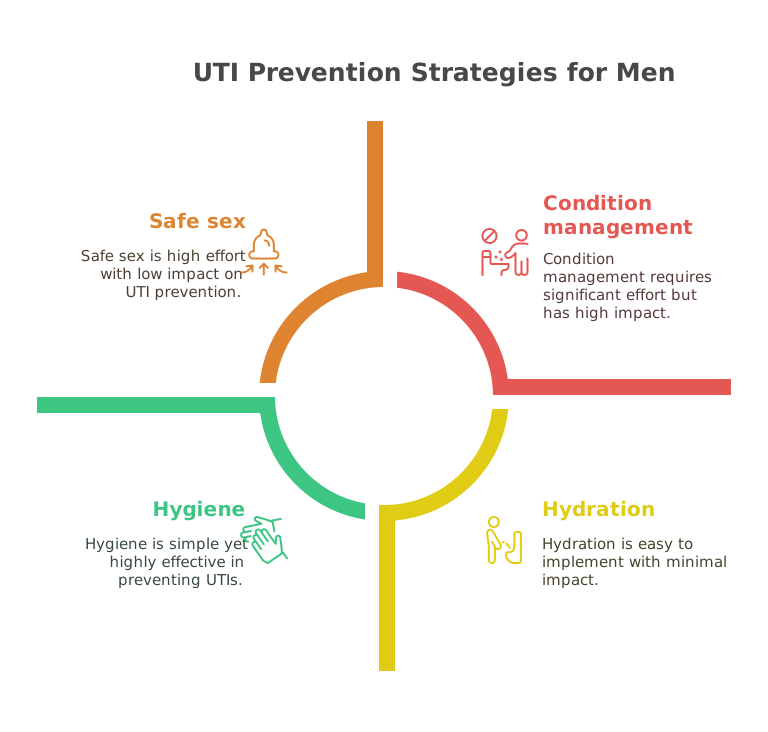
Preventing UTIs in Men
Prevention strategies include:
- Safe sex: Condoms lower STI-related UTI risk.
- Hydration: Supports regular urination.
- Hygiene: Keeps bacteria at bay.
- Clothing: Loose, cotton options enhance airflow.
- Condition management: Treats prostate or other issues.
Adopting these habits can significantly reduce UTI risk. Simple actions like staying hydrated and practicing good hygiene create an environment less hospitable to bacteria, while managing underlying health issues addresses root causes.
UTIs in High-Risk Groups: Diabetic, Medicated, and Bed-Bound Men
Some men face elevated risks:
- Diabetic men: A study from NCBI notes higher UTI rates due to poor immunity and bladder dysfunction.
- Medicated men: Immunosuppressants or antibiotics alter defenses.
- Bed-bound men: Immobility and catheters heighten susceptibility.
These groups require extra vigilance. Diabetes, for instance, impairs immune responses, making infections more frequent, while catheters in bed-bound men provide a direct pathway for bacteria.
Key Takeaways
- UTIs in men are rare but serious if ignored.
- Risk factors include prostate issues and diabetes.
- Antibiotics are essential, with lifestyle aids enhancing recovery.
- Prevention is effective with simple habits.
Frequently Asked Questions
- Are UTIs in men common?
No, they’re less common than in women, affecting only 12% of men, mostly over 50.
- Why are UTIs rare in men?
Men’s longer urethras make bacterial entry harder, but risks rise with age or health issues.
- What can cause UTIs in men?
STIs, prostate enlargement, diabetes, and catheters are common causes.
- How are UTIs in men treated?
Antibiotics for 7-14 days, adjusted by culture results, with possible natural supports like Volurine.
References
1. Risk factors for UTI in men Journal of Urology
2. UTIs in diabetic patients NCBI