Rochester, New York, 5/26/25 - Bone fractures represent a significant health concern, impacting individuals across all walks of life, from active athletes to aging adults. These injuries, ranging from minor cracks to complete breaks, often stem from trauma, overuse, or underlying conditions like osteoporosis. This comprehensive guide delves into two common types-stress fractures and wrist fractures-offering insights into their causes, symptoms, diagnosis, and management to empower readers with knowledge for prevention and recovery.
What Are Bone Fractures?
A bone fracture occurs when the structural integrity of a bone is compromised, resulting in a crack or complete break. Such injuries could affect any bone in the body, varying in severity from hairline fractures to shattered segments. Stress fractures, often seen in athletes, develop from repetitive force, while wrist fractures frequently occur in older adults due to falls.
These conditions disrupt daily life and require prompt attention. Understanding their nature is the first step toward effective management, particularly for stress fractures in weight-bearing bones and wrist fractures involving the radius or ulna.
What Are the Causes of Bone Fractures?
Several factors could lead to bone fractures. Traumatic events-such as falls, sports injuries, or vehicular accidents-often result in immediate breaks. Overuse, particularly in repetitive activities like running, might cause stress fractures over time, especially in the legs and feet.
Medical conditions like osteoporosis weaken bones, increasing fracture risk, while physical assaults could also contribute. Wrist fractures typically arise when individuals instinctively extend their hands to break a fall, placing sudden stress on the forearm bones.
What Are the Types of Bone Fractures?
Fractures are categorized by pattern, cause, or location, each offering unique diagnostic and treatment challenges.
Fractures Diagnosed by Pattern or Shape
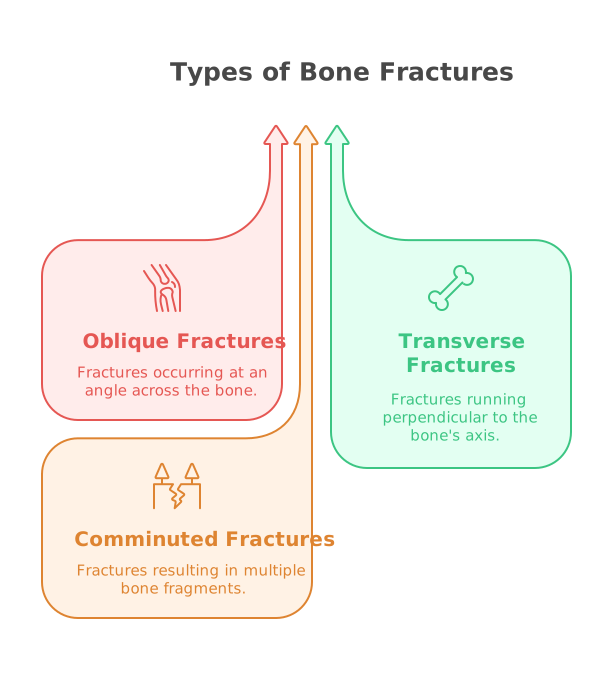
Patterns include oblique fractures (angled breaks in long bones), transverse fractures (horizontal breaks), greenstick fractures (partial breaks in children), comminuted fractures (multiple fragments), and spiral fractures (twisting injuries). These distinctions guide treatment approaches.
Fractures Diagnosed by Cause
Traumatic fractures result from single high-impact events, whereas stress fractures emerge from prolonged stress. Understanding the cause aids in prevention strategies.
Fractures Diagnosed by Location
Location-specific fractures, like those in the wrist or feet, affect treatment plans. Wrist fractures, common in fall-related injuries, often involve the distal radius and could significantly impair hand function.
What Are the Symptoms of Bone Fractures?
Symptoms of bone fractures typically include intense pain that worsens with movement, swelling, tenderness, bruising, and potential deformity. Difficulty moving the affected area is also common.
Stress fractures might present subtler signs, such as pain that intensifies during activity and subsides with rest. Wrist fractures, conversely, often cause immediate discomfort and visible swelling, hindering wrist mobility.
How Is a Bone Fracture Diagnosed?
Diagnosis begins with a thorough medical history and physical examination to evaluate symptoms and injury circumstances. Imaging tests-X-rays, CT scans, or MRIs-confirm the fracture’s extent and location.
Stress fractures might elude standard X-rays, necessitating advanced imaging for detection. Research underscores early diagnosis’s role in effective recovery, as noted in a study on fracture epidemiology (PubMed ID: 32304497).
What Are the Treatments for Bone Fractures?
Treatment varies by fracture type and severity. Immobilization with casts or braces stabilizes the bone, while reduction realigns displaced segments. Surgery, using plates or screws, might be required for complex cases.
Stress fractures often heal with rest and activity modification, whereas wrist fractures could need casting or surgical intervention. Pain relief options like Syncadol and bone-supporting supplements like Calceed could enhance recovery, supported by studies on calcium’s role in healing (PubMed ID: 17560407).
What Are the Complications of Bone Fractures?
Complications could include infections in open fractures, non-union (failure to heal), malunion (improper healing), nerve damage, or osteoarthritis if joints are involved.
Proper treatment minimizes these risks. Products like Osteofect might support bone strength, particularly in osteoporosis patients, reducing complication likelihood.
Key Takeaways
- Bone fractures range from minor cracks to severe breaks, caused by trauma, overuse, or medical conditions.
- Stress fractures arise from repetitive stress, common in athletes, while wrist fractures often result from falls.
- Symptoms include pain, swelling, and mobility issues, varying by fracture type.
- Treatments like immobilization, surgery, or supplements such as Calceed support healing.
- Complications might occur without proper care, mitigated by products like Osteofect.
Frequently Asked Questions
- What distinguishes a stress fracture from a typical fracture?
A stress fracture involves a small crack from repeated stress, often in athletes, whereas a typical fracture is a complete break from a single event. Both require distinct management approaches.
- How long might a wrist fracture take to heal?
Most wrist fractures heal in 6-8 weeks with immobilization. Severe cases could extend recovery time, depending on treatment and patient health.
- Could supplements aid fracture recovery?
Supplements like Calceed, rich in calcium and vitamin D, might bolster bone healing, as evidenced by research (PubMed ID: 17560407).
- What signs indicate a stress fracture?
Signs include activity-related pain that eases with rest, along with swelling and tenderness. Early recognition could prevent worsening.
References
1. Fracture epidemiology and risk factors PubMed
3. Stress fractures in athletes PubMed
4. Management of wrist fractures PubMed