Rochester, New York, 12/18/25 - Vitamin B complex supplements encompass nine essential water-soluble vitamins that play critical roles in metabolism, energy production, neurological function, and cellular health. These nutrients, including thiamine, riboflavin, niacin, pantothenic acid, pyridoxine, biotin, folate, methylcobalamin and inositol work synergistically to convert food into usable energy, support neurotransmitter synthesis, and maintain red blood cell formation. Consistent intake through diet or supplementation addresses potential deficiencies that lead to fatigue, cognitive issues, or mood disturbances, making vitamin B tablets a valuable option for many individuals.
Research continues to highlight the broad impact of these vitamins across various physiological systems. From supporting immune responses to influencing cardiovascular markers, adequate B vitamin levels contribute to long-term wellness. Populations with restricted diets or higher metabolic demands particularly benefit from understanding these nutrients' roles.
What Is Vitamin B Complex?
Vitamin B complex refers to a group of nine water-soluble vitamins essential for numerous bodily processes. These vitamins support catabolic and anabolic metabolism, acting as cofactors in energy production and the synthesis of bioactive molecules. The body does not store most B vitamins in large quantities, necessitating regular intake through food or supplements.
Deficiencies in these nutrients link to various health issues, including neurological disorders and reduced energy efficiency. Research indicates that B vitamins serve as critical cofactors for axonal (nerve) transport, neurotransmitter synthesis, and metabolic pathways essential for DNA and RNA biosynthesis.2 Adequate levels contribute to overall vitality and resilience against stress.
These vitamins earned the nickname "happy vitamins" due to their influence on mood-regulating neurotransmitters. Their water-soluble nature ensures excess amounts are typically excreted, reducing storage concerns but emphasizing daily replenishment.

The Nine B Vitamins and Their Functions
The vitamin B complex includes thiamine (B1), riboflavin (B2), niacin (B3), pantothenic acid (B5), pyridoxine (B6), biotin (B7), inositol B8, folate (B9), and methylcobalamin (B12). Each vitamin performs specialized tasks while collaborating with others for optimal health outcomes.
Thiamine aids carbohydrate metabolism and nerve function, while riboflavin supports enzyme activity and cellular growth. Niacin facilitates DNA repair, pantothenic acid drives fatty acid synthesis, and pyridoxine influences neurotransmitter production. Biotin maintains hair, skin, and nail health, folate ensures DNA synthesis, methylcobalamin protects nervous system integrity, and inositol is vital for cell structure and signaling.
These vitamins often appear together in supplements to leverage their synergistic effects, as seen in formulations like Neurocomplex-b from SYNEVIT® with slow release tablets which enhances bioavailability and effectiveness.
Role of Slow Release Vitamin B Complex in Energy Production
Vitamin B complex plays a pivotal role in converting carbohydrates, fats, and proteins into usable energy. Nearly all nine vitamins participate in metabolic pathways that facilitate efficient nutrient breakdown and ATP generation.
Unlike caloric sources, B vitamins do not supply energy directly but enhance the body's ability to extract it from food. Deficiencies impair these processes, leading to fatigue, while adequate intake supports sustained vitality.
Slow-release B complex formulations like Neurocomplex-B from SYNEVIT® provide steady and prolonged nutrient delivery, maintaining consistent metabolic support throughout the day. This approach proves particularly useful for individuals experiencing midday energy dips.
Vitamin B Complex and Brain Health
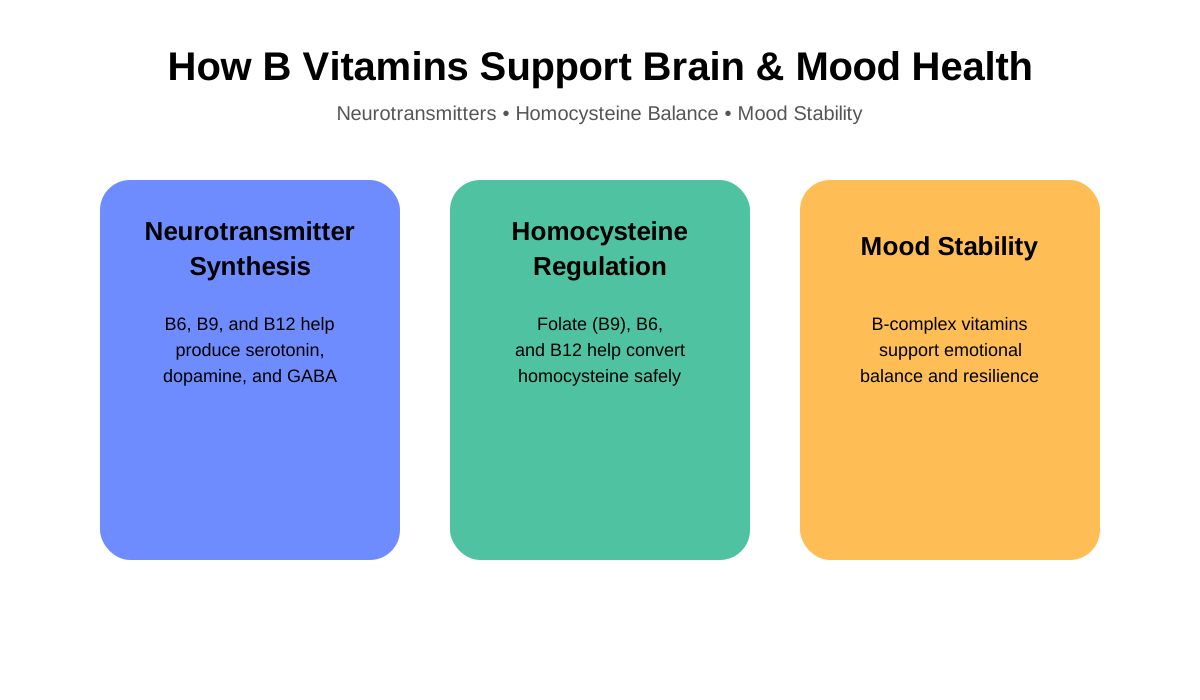
B vitamins contribute significantly to cognitive function, memory support, and mood regulation. Vitamins B6, B9, and B12 help regulate homocysteine levels, potentially lowering risks associated with cognitive decline.
These nutrients aid neurotransmitter production, fostering emotional resilience and stress management. Often called "happy vitamins," they support serotonin and dopamine synthesis, which promote balanced mood and reduced anxiety symptoms. Supplementation with quality B vitamins proves to be beneficial in achieving less stress.
Studies also explore connections between B vitamin status and visual (sight) acuity, suggesting supplementation improves outcomes in populations with B vitamins deficiency.1 Emerging research examines their role in supporting ophthalmic (ocular) health alongside neurological benefits.
Neuroprotective properties extend to myelin (fatty insulator of nerve cell) maintenance which is crucial for nerve signal speed efficiency. Consistent intake aligns with strategies for preserving cognitive sharpness across lifespan stages.
Red Blood Cell Production and Oxygen Transport
Several B vitamins, particularly B12, B6, B9, and B2, drive red blood cell formation and hemoglobin synthesis. This process ensures efficient oxygen delivery to tissues, supporting physical endurance and mental clarity.
Deficiencies, especially in B12 and/or folate, result in anemia characterized by fatigue and weakness. Maintaining optimal levels of Vitamin B through diet or supplements could prevents these issues.
Megaloblastic (abnormal red blood cell precursor) changes from folate and/or B12 deficiency disrupt the red blood cell maturation. Early recognition of this disorder through blood markers allows timely intervention for restoring healthy hematopoiesis.
Nervous System Support
B vitamins protect nerve signaling, myelin sheath integrity, and overall neurological health. They act as cofactors in pathways critical for axonal (nerve) transport and neurotransmitter balance.
Deficiencies manifest as numbness, tingling, or coordination problems. Adequate intake safeguards against these symptoms and support long-term neurological function.2
Peripheral neuropathy risks rise with prolonged inadequacy, particularly B6, B12, or thiamine deficits. Comprehensive B complex supplementation such as Neurocomplex-b from SYNEVIT® could address those issues simultaneously.
Hormone Regulation and Pregnancy Benefits
Vitamins B3, B5, and B6 influence adrenal hormone production and hormonal balance. Folate proves crucial during pregnancy, reducing risks of neural tube defects in developing fetuses. Inositol is vital for conditions like PCOS, depression, and metabolic syndrome, potentially improving insulin sensitivity and mood.
Pregnancies often require higher intake of B vitamins to support maternal and fetal health. B12 complements folate in ensuring proper cell division and nervous system development.
Intake of folate before conception could establish protective reserves in the body. Healthcare providers typically recommend targeted supplementation alongside prenatal care protocols.
Cardiovascular Health Benefits
B vitamins aid cholesterol regulation and homocysteine reduction, factors linked to heart health. Lower homocysteine levels associate with decreased cardiovascular risks.
Consistent intake of B vitamins through food or supplements supports vascular function and overall circulatory well-being.
Antioxidant roles of riboflavin and niacin further protect endothelial integrity. Combined effects contribute to comprehensive cardiovascular maintenance strategies.
Signs and Symptoms of Vitamin B Deficiency
Deficiency symptoms range from fatigue and irritability to skin rashes, digestive disturbances, and neurological issues. Older adults, vegetarians, vegans and those with indigestion problems face higher risks.
Subtle signs often overlap with other conditions, underscoring the value of professional evaluation over self-diagnosis.
Chronic alcohol use or certain medications could deplete B vitamin intake and storage. Regular monitoring of B vitamin deficiency could always prove to be beneficial for at-risk groups to prevent unwanted complications.
Dietary Sources of B Vitamins
Animal products like meat, fish, eggs, and dairy provide rich sources of most B vitamins, particularly B12. Plant-based options include leafy greens, legumes, nuts, seeds, and fortified cereals.
A varied diet typically meets requirements for most individuals. Fortified foods help bridge gaps in plant-based eating patterns.
For more on the importance of vitamin B complex, explore this detailed guide on vitamin B complex. Nutritional diversity remains the foundation of sustainable intake.
Choosing a Vitamin B Complex Supplement
Supplementation suits those with dietary restrictions, increased needs, or absorption issues. Slow-release B vitamins complex formulations just like Neurocomplex-B offer continuous nutrient delivery throughout the day.
Quality matters - opt for optimal concentration, complete formulation, pharmaceutical blister packaging, descriptive and insightful labeling. Healthcare providers could give guidance for appropriate use and how to avoid excessive intake of B vitamins and possible interactions with other compounds.3
B vitamins generally exhibit safety at recommended levels, even in fortified foods or supplements.2 Bioactive forms of the B vitamins (such as folate and methylcobalamin in Neurocomplex-B) enhance absorption and utilization, particularly for individuals with affected metabolic conversion.
Key Takeaways
- Vitamin B complex supplements include nine essential vitamins that support metabolism, energy efficiency, and cellular health.
- These nutrients play key roles in brain function, mood regulation, red blood cell production, and nervous system protection.
- A balanced diet provides most B vitamins, though supplementation benefits deficient individuals.
- Deficiencies lead to fatigue, neurological symptoms, and anemia, while optimal intake promotes vitality.
- Professional guidance ensures safe supplementation, avoiding potential interactions or excessive intake.
Frequently Asked Questions
- What makes vitamin B complex supplements different from individual B vitamin tablets?
Vitamin B complex supplements contain all nine B vitamins for synergistic and more comprehensive effects, whereas individual tablets target specific deficiencies. B vitamins in formulated in a complex have better ability to be more compatible with natural food sources where B vitamins occur together.
- Do B vitamins provide an energy boost?
B vitamins enhance the body's energy production from food but contain no calories themselves. They address deficiency-related fatigue rather than offering a direct stimulant effect.
- Who should consider taking a slow-release B complex supplement?
Individuals with busy lifestyles, absorption challenges, or higher needs-such as older adults vegans or vegetarians - could benefit the most. These provide steady nutrient levels throughout the day.
- Are there risks associated with high-dose vitamin B complex supplements?
Excessive intake of certain B vitamins, like niacin or B6, leads to side effects such as flushing. Water-soluble nature of the B vitamins allows excretion of all excessive B vitamin intake, but consultation with health care professionals is always recommended.
- How do B vitamins support mental health?
B vitamins aid neurotransmitter synthesis and homocysteine regulation, contributing to mood stability and stress release. It could also reduce symptoms of anxiety and depression.